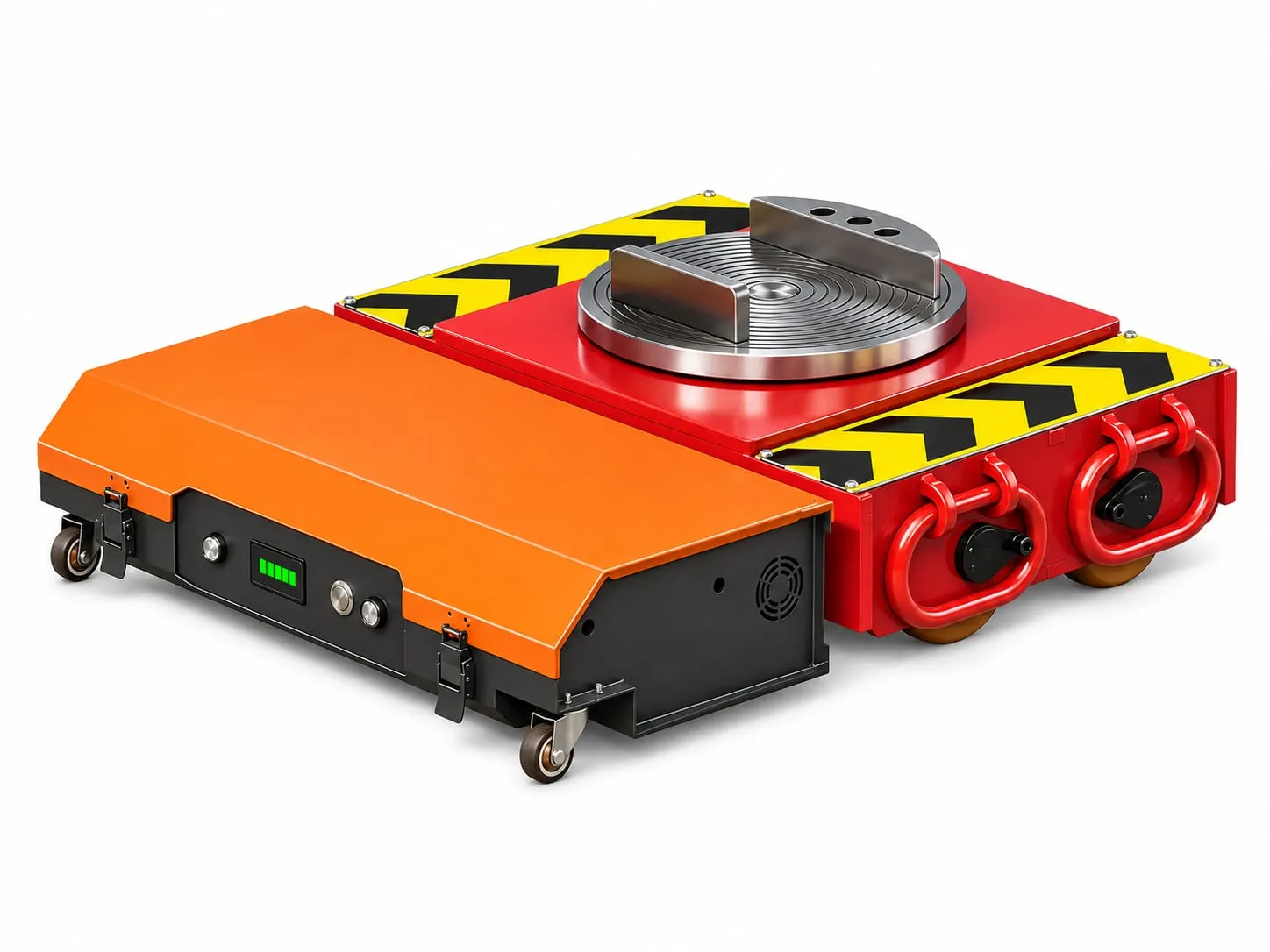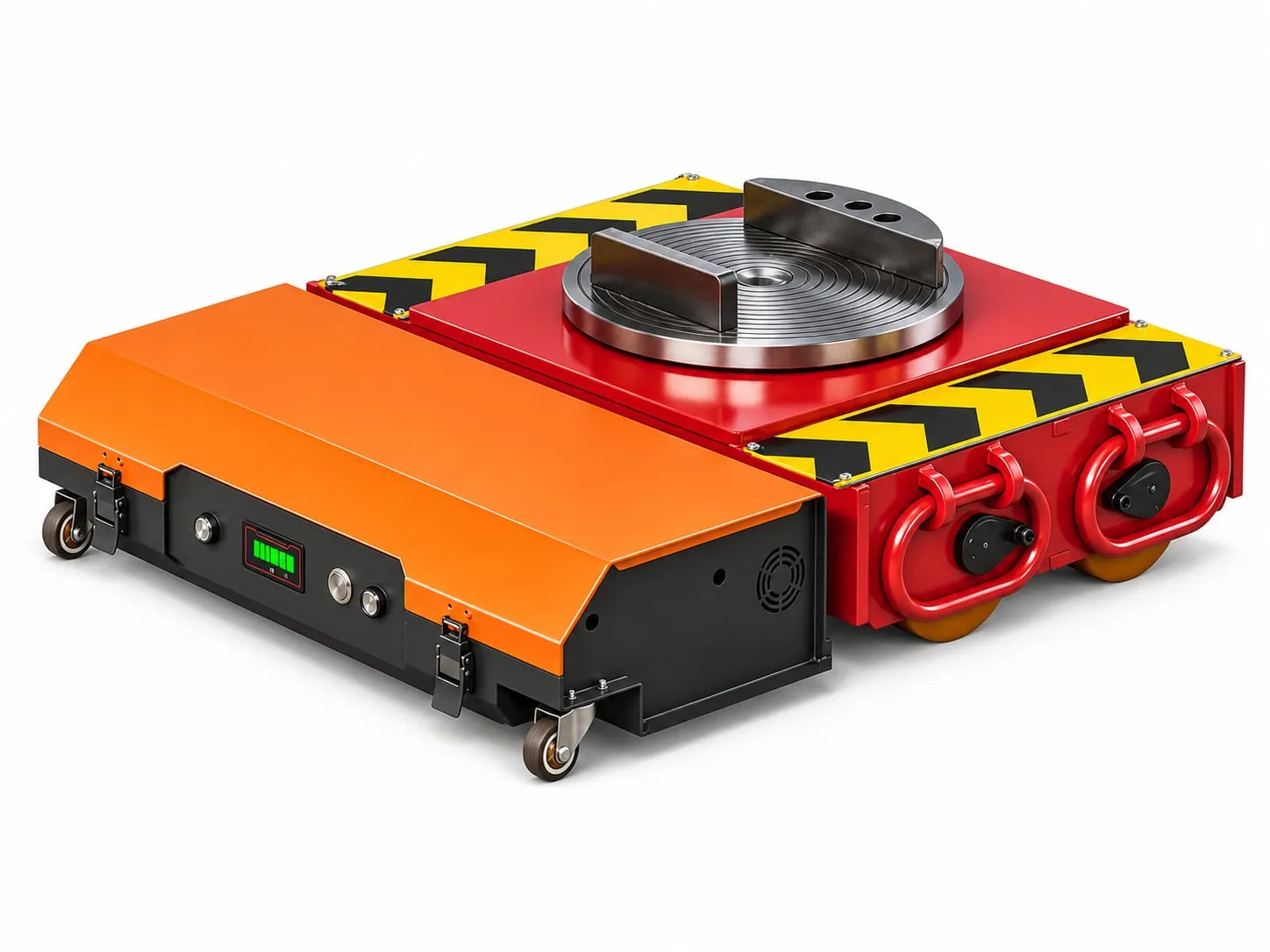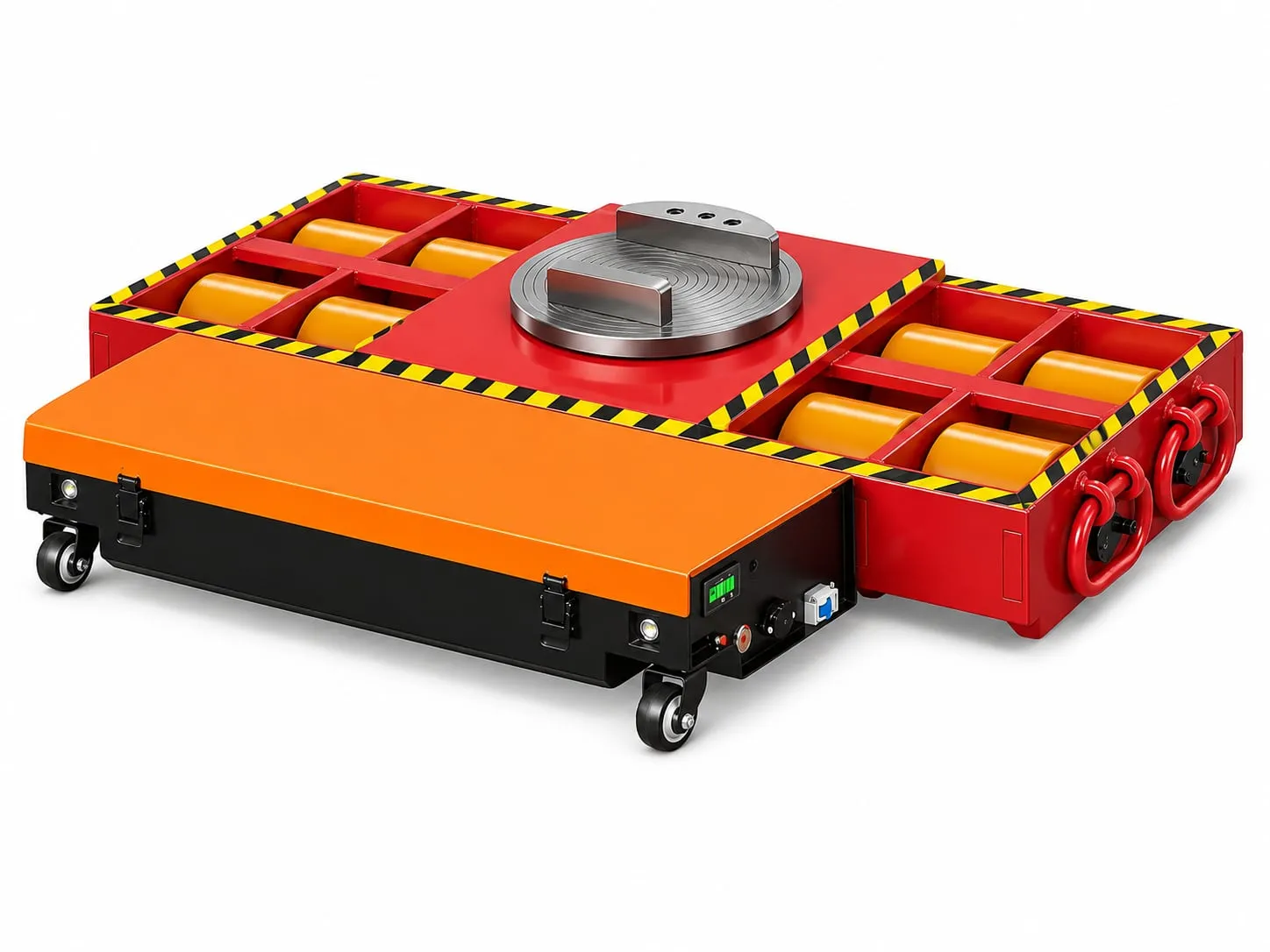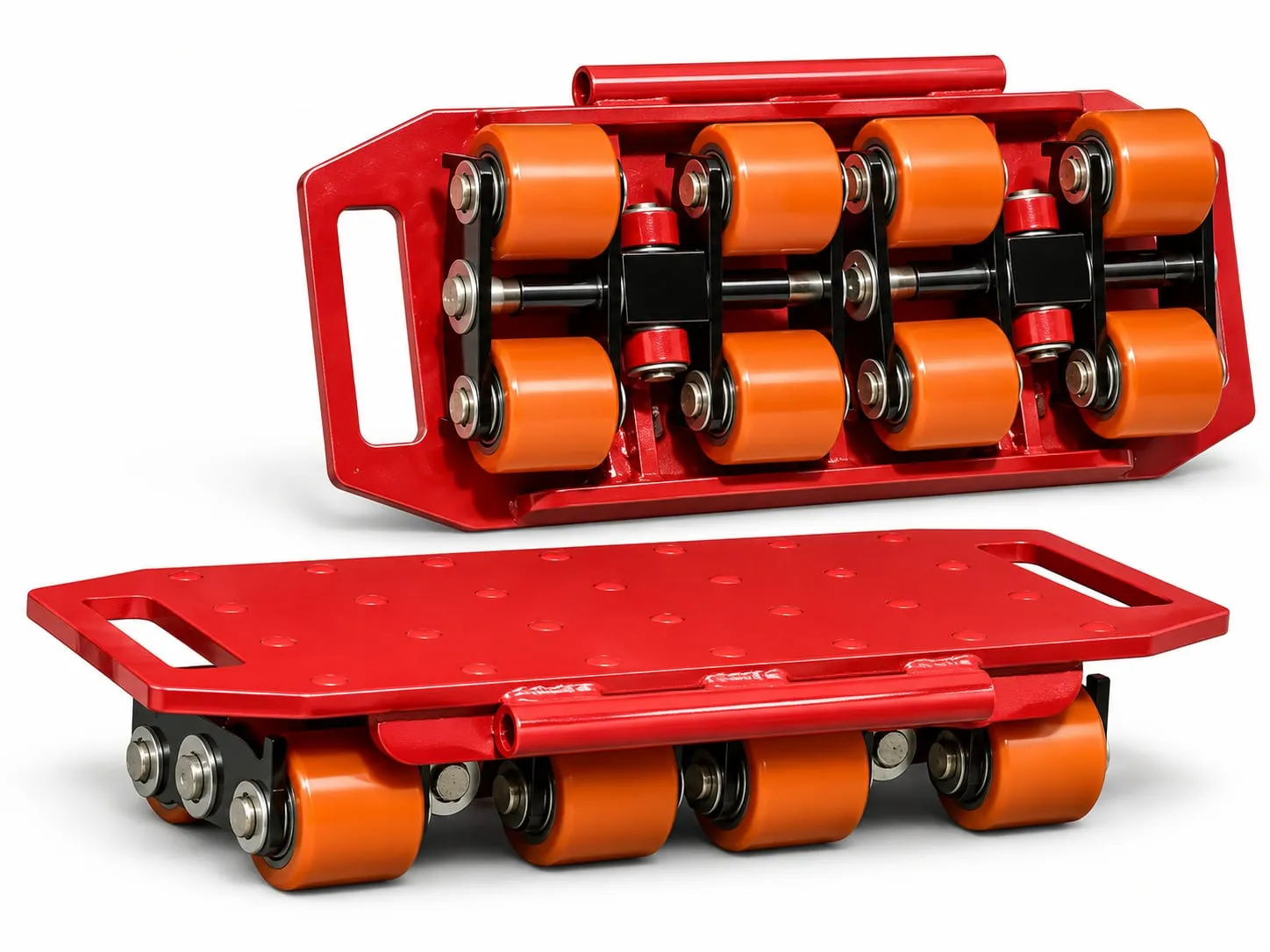
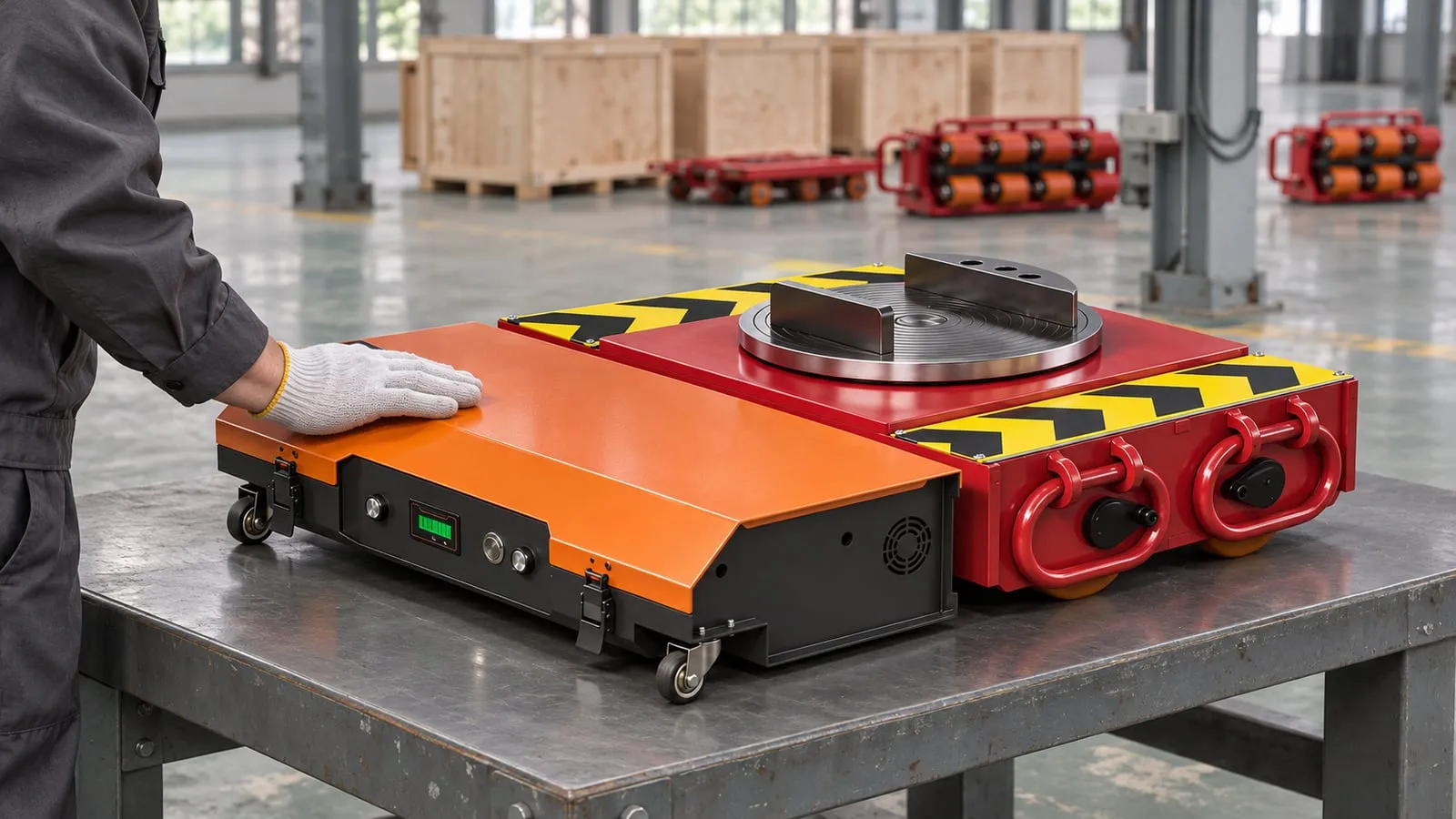
Short answer: The electric tank trolley price depends mainly on capacity, motor power, battery size and chemistry, remote type and accessories. Public marketplace listings in November 2026 show roughly US$1,300–2,000 per unit for 20–50 t models (reference only, before freight and duties). For a real figure, send a detailed RFQ and compare complete sets, not headline unit prices.
We do not publish our own prices; contact us with your load and quantity for a quote.
Reference prices from public listings
Public marketplace listings, November 2026, reference only. We checked supplier listings on Alibaba.com:
- One supplier lists a three-wheel tank trolley at US$1,285 (20 t), 1,328 (25 t), 1,428 (30 t), 1,714 (40 t) and 2,000 (50 t) per unit, minimum order one unit.
- Another lists a 20 t electric tank trolley with lithium battery at US$2,000 per set.
The spread is wide because the specifications differ. Listing prices usually exclude freight, insurance, import duty and local taxes, and may not include auxiliary trolleys or a spare battery. Confirm the rated capacity, because some listings mix model sizes.
What drives the price
| Cost driver | What changes | Questions to ask |
|---|---|---|
| Capacity | Bigger motors, thicker plate, more wheels | Is the rating for the set or the mover alone? |
| Motors | e.g. 750 W × 2 on TM-20, 3000 W × 2 on TM-60 | Do the motors have brakes? |
| Battery | 30–120 Ah; NCM or LiFePO₄ | Capacity, chemistry, run time, cell maker |
| Remote | Basic handset vs industrial remote | Emergency stop? Can one remote drive 2 or 4 units? |
| Wheels | Polyurethane size and width | Wheel diameter and replacement cost |
| Steel | Deck plate 10–16 mm | Plate thickness and grade |
| Accessories | Auxiliary trolleys, jacks, hydraulic pump, spare battery, case | What exactly is in the quote? |
NCM vs LiFePO₄: NCM packs are lighter for the same capacity; LiFePO₄ is usually chosen for longer cycle life and better thermal stability. Several of our models offer both. See our lithium battery guide for run time and charging.
Price per tonne is a poor yardstick: a rating may cover the whole set, not the mover alone. Read how to size a tank mover set before comparing quotes.
How to buy: step by step
1. Send a complete RFQ
Include load weight and footprint, the set-up you need (1 tank mover + 2 auxiliary trolleys suits about 9 jobs in 10), quantity, battery chemistry, remote type, charger plug and voltage, destination port, Incoterm, and any OEM or private-label requirements.
2. Start with a sample or small first order
Many dealers order one or two sets first, test them on real jobs, then place a stock order.
3. Inspect before shipment
Ask for a test-run video under load, a full charge and discharge check, a photo of the nameplate and serial numbers, and the battery documents. Larger buyers often hire a third-party inspector.
4. Agree the Incoterm
The International Chamber of Commerce publishes eleven Incoterms rules; the current edition is Incoterms 2020.
- FOB (sea): the seller loads the goods on your ship at the Chinese port; you arrange and pay main freight and insurance.
- CIF (sea): the seller pays freight and minimum insurance to your port; risk still passes when the goods are loaded in China.
- DAP (any mode): the seller delivers to a named place, ready for unloading; you handle import clearance and duties.
5. Crates and battery documents
We ship each tank mover in an export plywood crate; auxiliary trolleys travel in a separate crate. Lithium batteries ship as dangerous goods with a UN38.3 test report and MSDS from the battery maker. IATA notes that lithium battery shipments are often wrongly labelled or handled, so give your forwarder these papers early.
| Model | Crate (mm) | Gross weight |
|---|---|---|
| TM-20 | 765 × 750 × 400 | 136 kg |
| TM-30 | 830 × 750 × 410 | 165 kg |
| TM-60 | 1280 × 910 × 450 | 312 kg |
6. Lead time, payment and warranty
Ask for lead time for stock units and for private-label orders, and whether batteries are in stock. Payment is commonly a deposit with the balance before shipment, or a letter of credit for larger orders. Agree the warranty period in writing, what it covers (motors, controller, battery) and which spare parts (wheels, remote, charger) to stock.
Example: landed-cost structure for 2 × TM-30 + 4 auxiliary trolleys
Example (structure only; money left as placeholders):
- Tank mover crates: 2 × (0.83 × 0.75 × 0.41 m) = 2 × 0.255 m³ = 0.51 m³, 2 × 165 kg = 330 kg.
- Auxiliary trolleys: four 4-roller trolleys at about 28 kg each = 112 kg net, in one separate crate (size from the packing list).
- Total: about 0.51 m³ + trolley crate, roughly 450–500 kg gross. This fits as LCL (shared container) freight.
Landed cost = goods price (FOB) + sea freight (per m³ or per tonne, from your forwarder) + insurance + dangerous-goods surcharge for lithium batteries + destination charges + import duty and taxes (by your country’s tariff code) + local delivery.
Fill in each line from real quotes; on small orders, freight can be a large share.
Next steps
Ready to compare? Look at the TM-20, TM-30 and TM-60, then send us your RFQ. Planning the first job? Read how to move heavy machinery with tank movers.