Short answer: For a factory relocation, raise each machine a few centimetres with jacks, slide an electric tank mover under one end and two auxiliary cargo trolleys under the other, then drive the load to its new bay by remote control. One operator steers, nobody pushes, and no forklift travels with the load.
Why plant teams and riggers use tank movers for relocations
A factory relocation is mostly short, repeated moves inside buildings: out of a bay, along an aisle, through a door, onto a truck or into a new line. Forklifts run out of capacity or reach on heavy machine tools and presses. Overhead cranes rarely cover the whole route, and manual roller skids need a crew to push and pull the load.
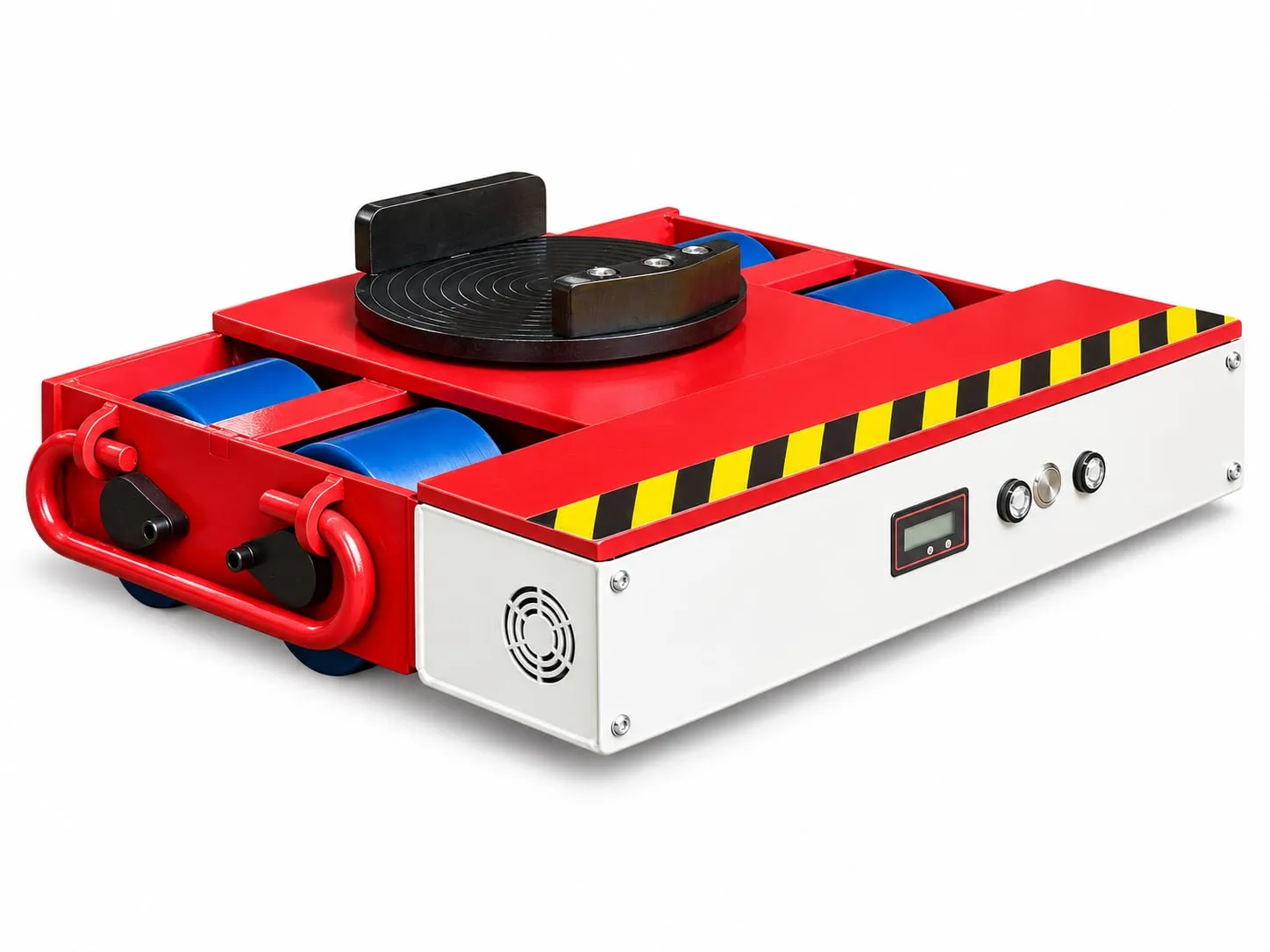
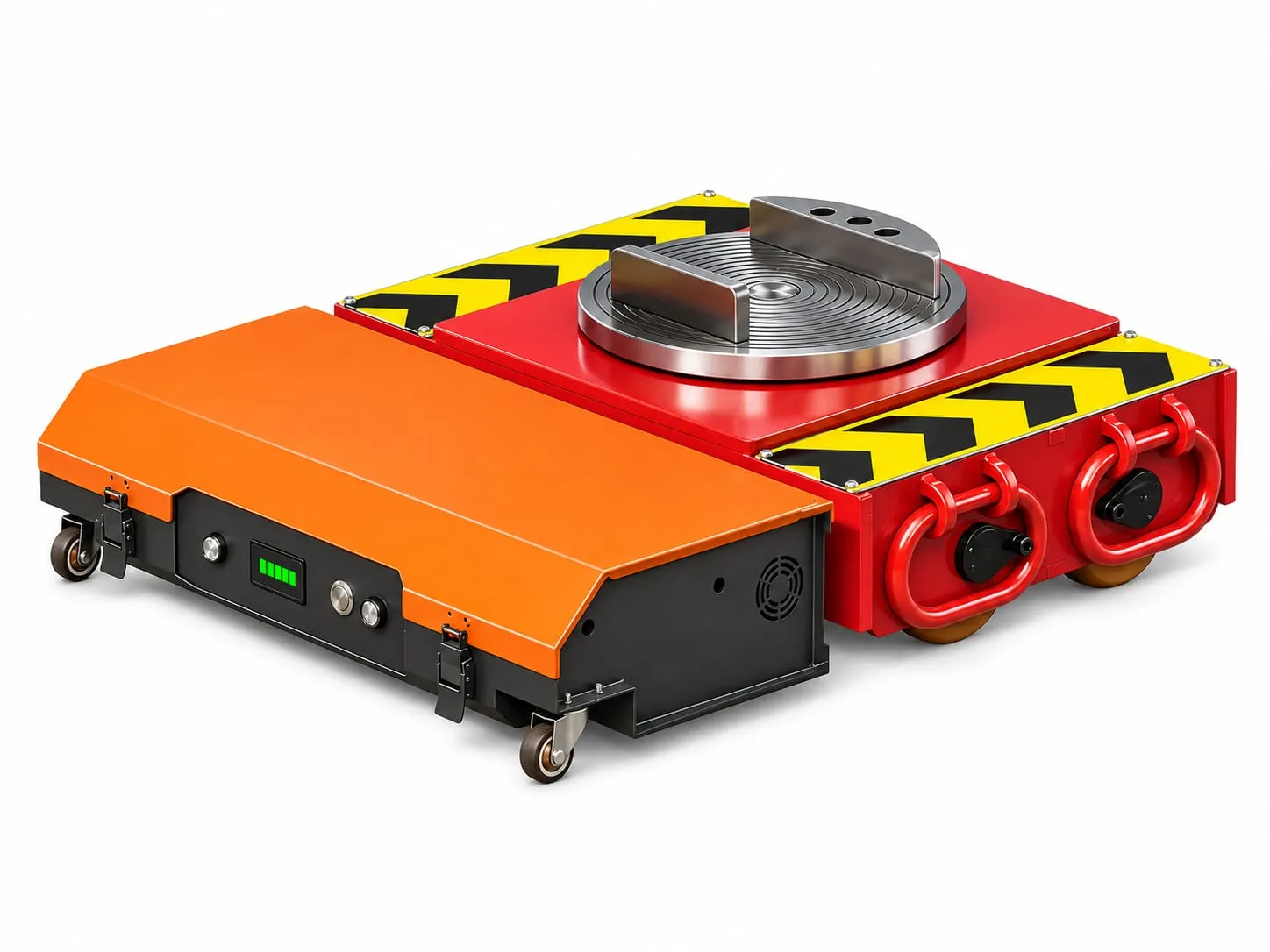
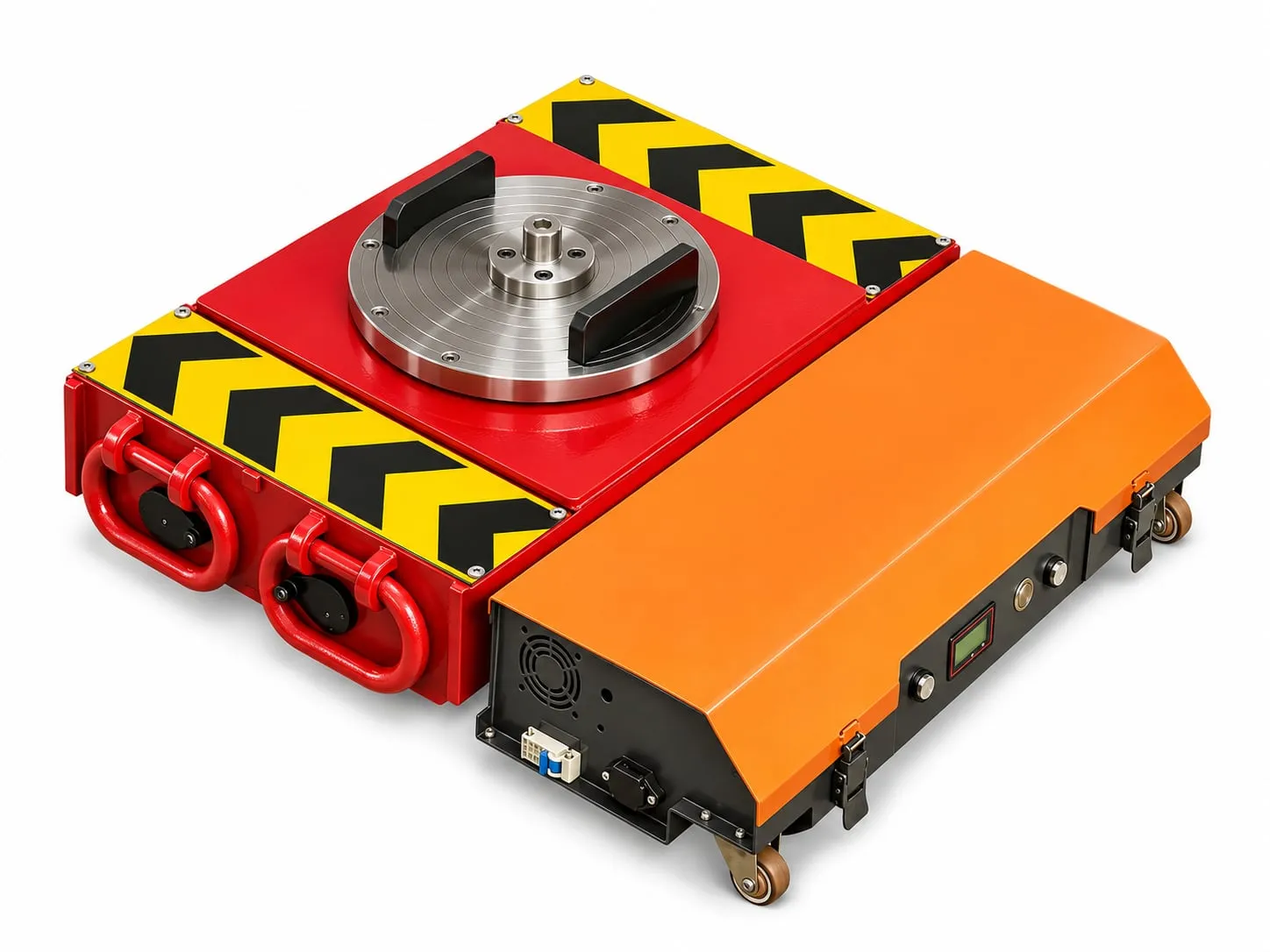
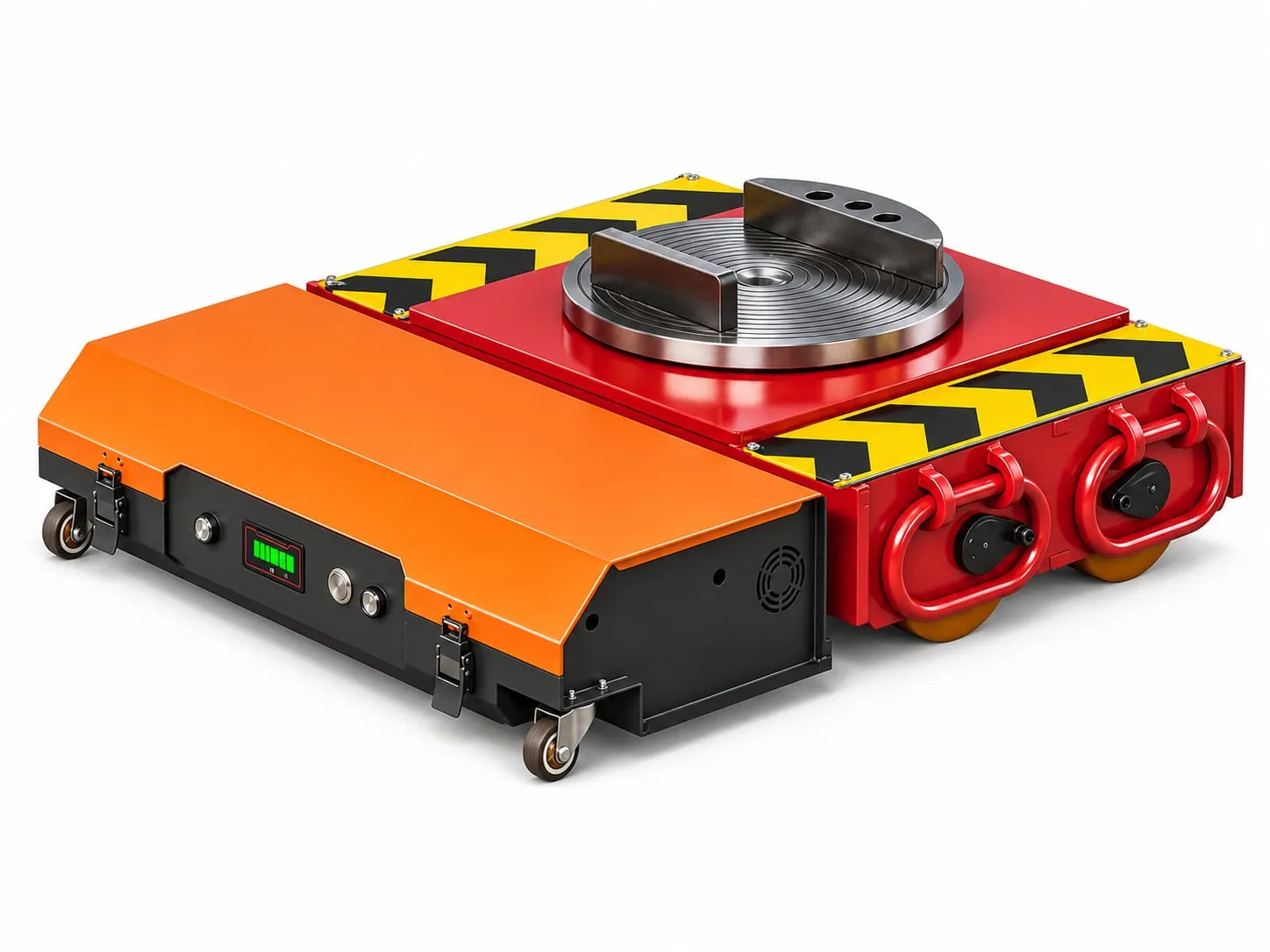
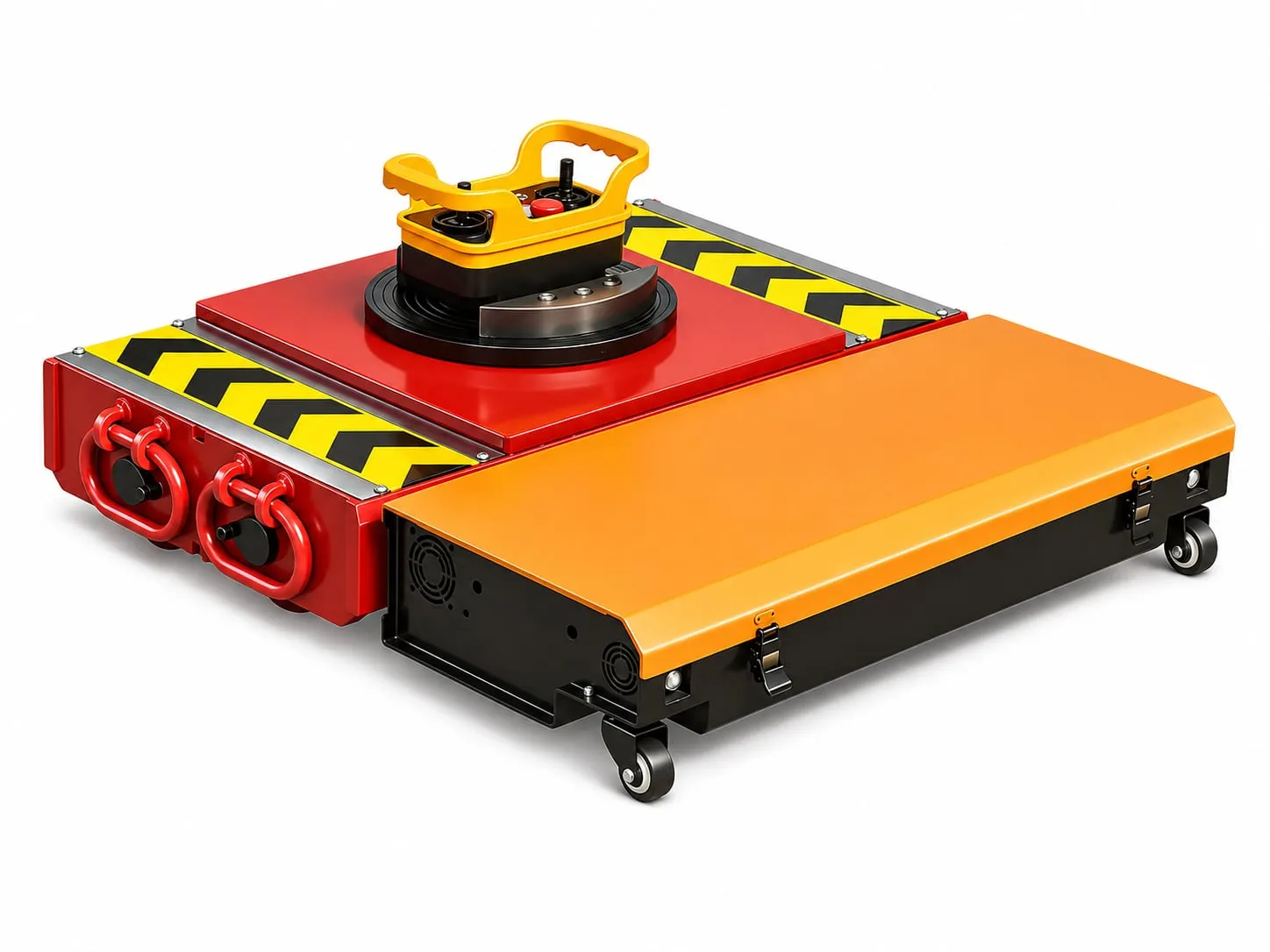
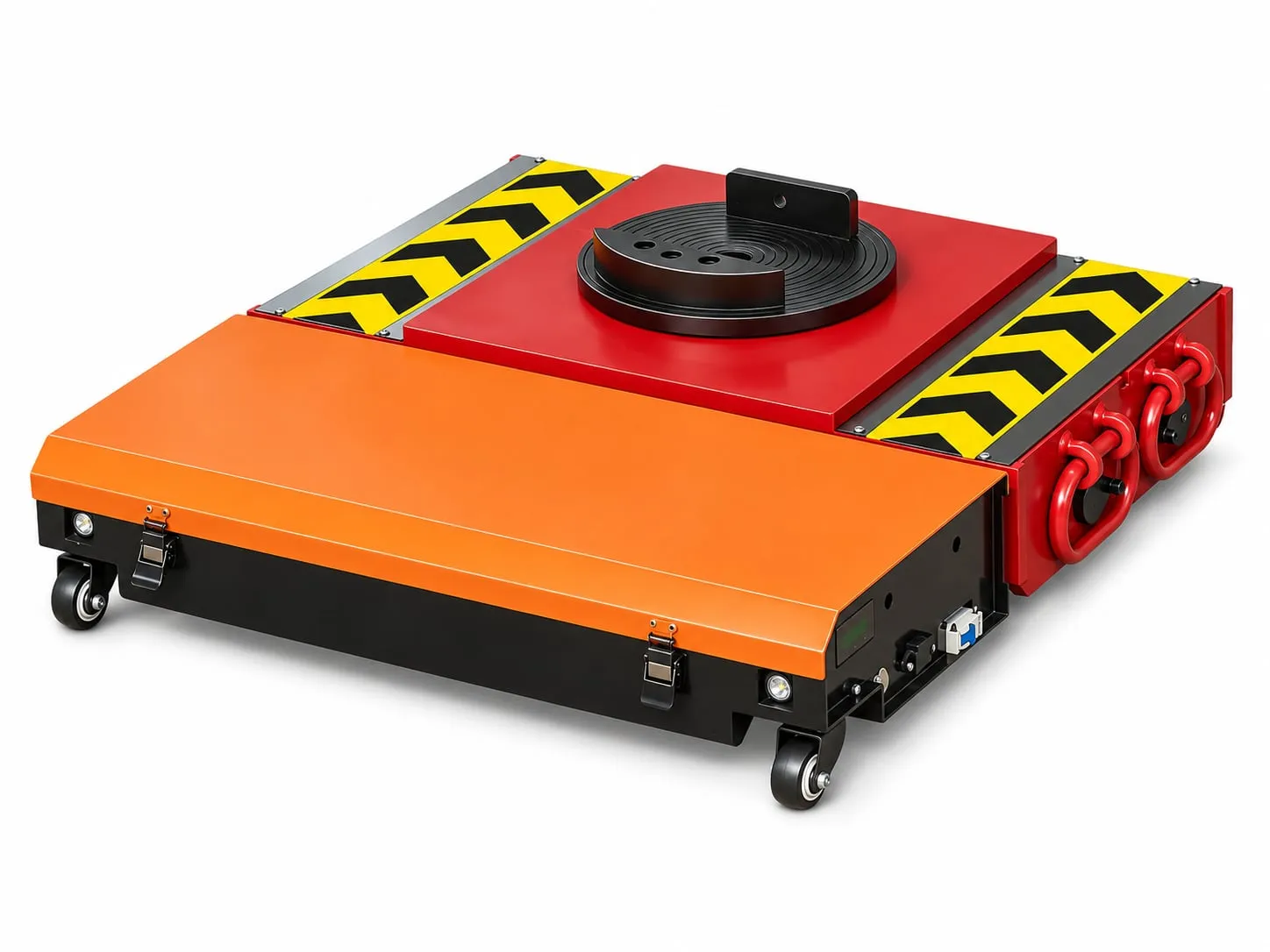
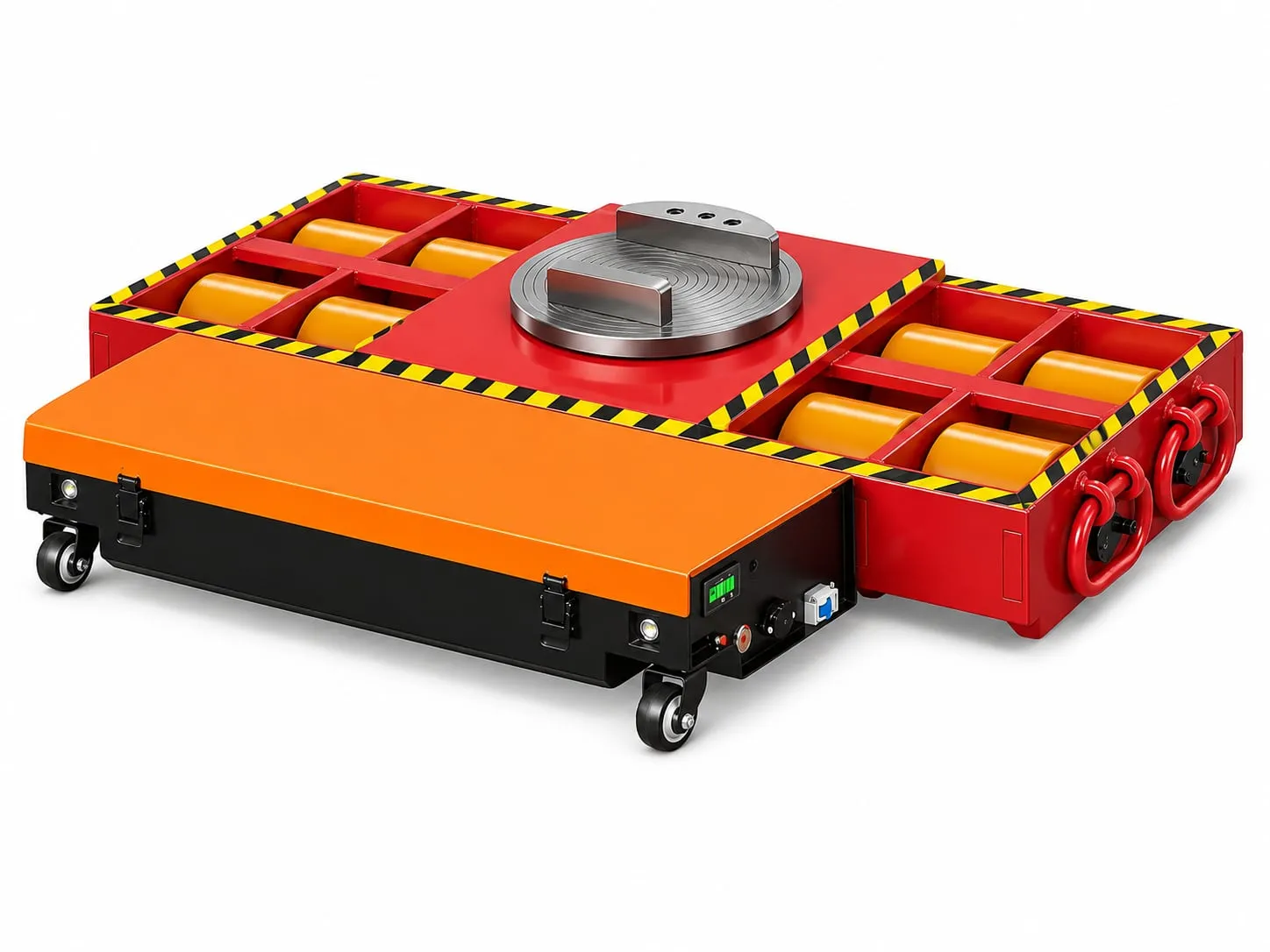
An electric tank mover adds the missing piece: powered, slow, controlled travel at 2–10 m/min under a load of up to 60 t. It has two geared motors with brakes, a 48 V lithium battery and a Ø290 mm turntable that turns 360°, so the load follows the operator around corners. When the machine reaches its new place, the same jacks lower it onto its feet.
Plan the move before anything is lifted
Good relocation contractors start with paperwork, not equipment. Merritts, a long-established UK machinery mover, advises allowing as much time as possible to plan scope, timelines and resources, with a full equipment inventory and layout drawings of the new site. In the UK, HSE states that all lifting operations must be planned by a competent person, supervised and carried out safely, and the jacking part of a tank mover job falls under that.
Your plan should list, for each machine:
- Weight and centre of gravity, from the maker’s data plate, manual or foundation drawing. If the centre of gravity is unknown, assume it sits off-centre.
- Lifting points: where jacks or slings may act and where the tank mover deck can bear without crushing covers, pipes or panels.
- Disconnections: power, air, coolant and hydraulics, plus match marks so the line goes back together the same way.
- Route: start point, end point and every door, joint, ramp and turn between them.
Route and floor checks
Walk the route with a tape measure before move day.
- Floor capacity. A tank mover puts the load onto four wheels (eight on the TM-60). Ask the site engineer to confirm the slab can take those point loads, especially over basements, cable trenches and old pits.
- Joints and gaps. Cover expansion joints, drain grates and trench lids with steel plates so the polyurethane wheels roll smoothly.
- Clear width and height. Add a margin either side of the machine for the operator and a spotter.
- Slopes. Factory guidance is up to about 15°; check any ramp, dock plate or yard slope with us.
- Outdoor sections. On compacted ground we fit wider polyurethane wheels. We do not make tracked versions.
Choosing the set for typical factory loads
The model number is what a complete set can move. The tank mover itself carries half of that, so size it for the heavier end of the machine.
| Typical load | Typical weight | Suggested set |
|---|---|---|
| Lathes, small presses, injection moulding machines | 5–10 t | TM-10 or TM-20 + 2 auxiliary trolleys |
| Press brakes, CNC machining centres | 12–18 t | TM-30 + 2 auxiliary trolleys |
| Large presses, stamping lines | 20–40 t | TM-40 or TM-50 + 2 auxiliary trolleys, or a 2 + 2 set |
| Heaviest line sections, long or off-centre loads | 40–60 t | TM-60, or 2 tank movers + 2 trolleys |
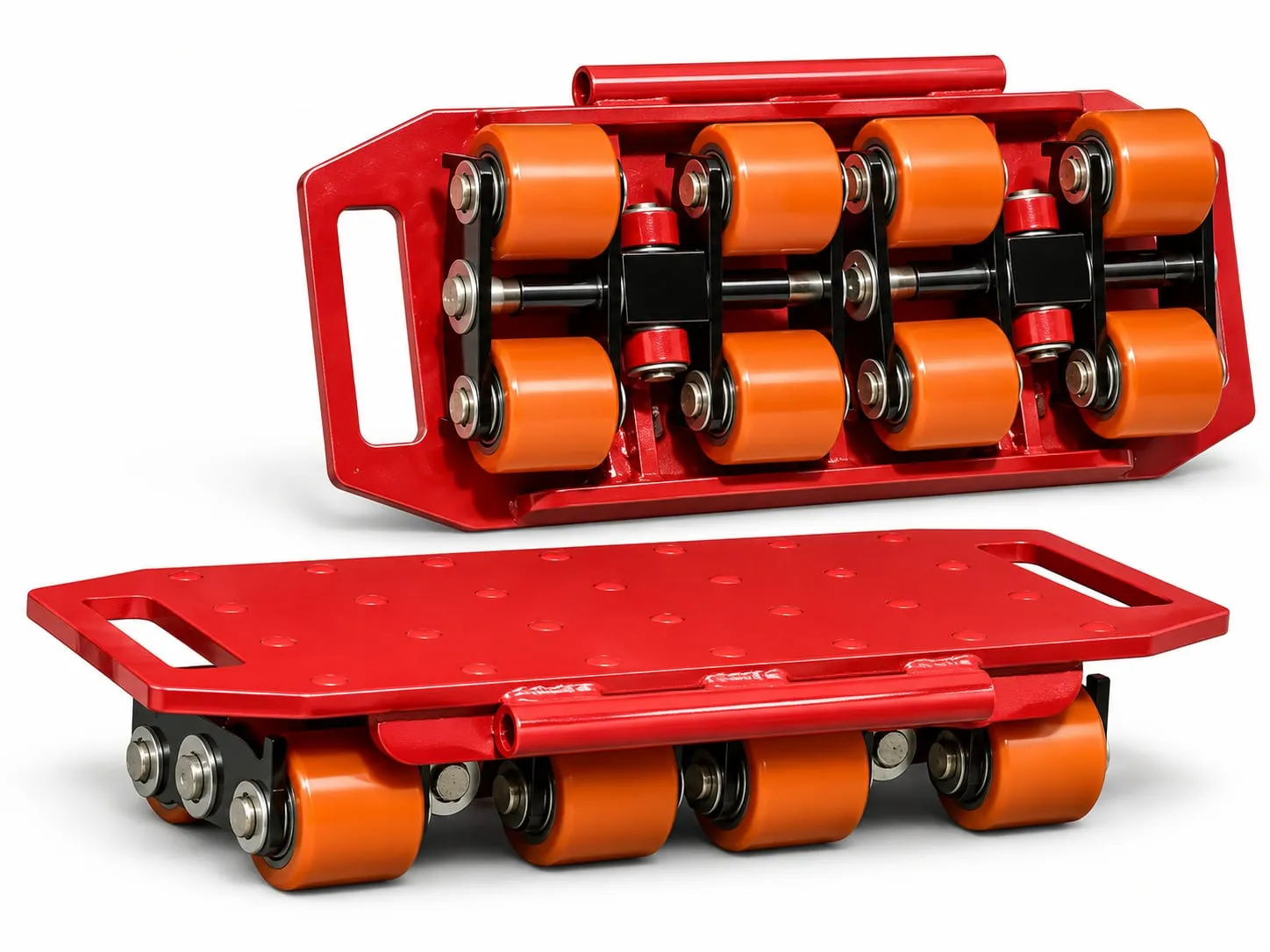
Pick auxiliary cargo trolleys by the load each one carries: from the mini 6-roller (5 t) up to the 20-roller four-row unit (60 t).
Step by step
- Isolate and disconnect the machine and remove anchor bolts.
- Jack it up evenly with claw or hydraulic jacks (a 48 V lithium hydraulic pump is available) until there is room for the 145–185 mm deck.
- Place the tank mover under the heavier end, centred on a strong point, and the two auxiliary trolleys under the other end.
- Lower the machine onto the turntable and trolleys, check it sits level, and remove the jacks.
- Drive slowly at the bottom of the 2–10 m/min range for the first metres, with a spotter watching the trolleys.
- Steer through turns using the turntable; the trolley end follows.
- Position and lower at the new place, then set the machine on its feet or foundation.
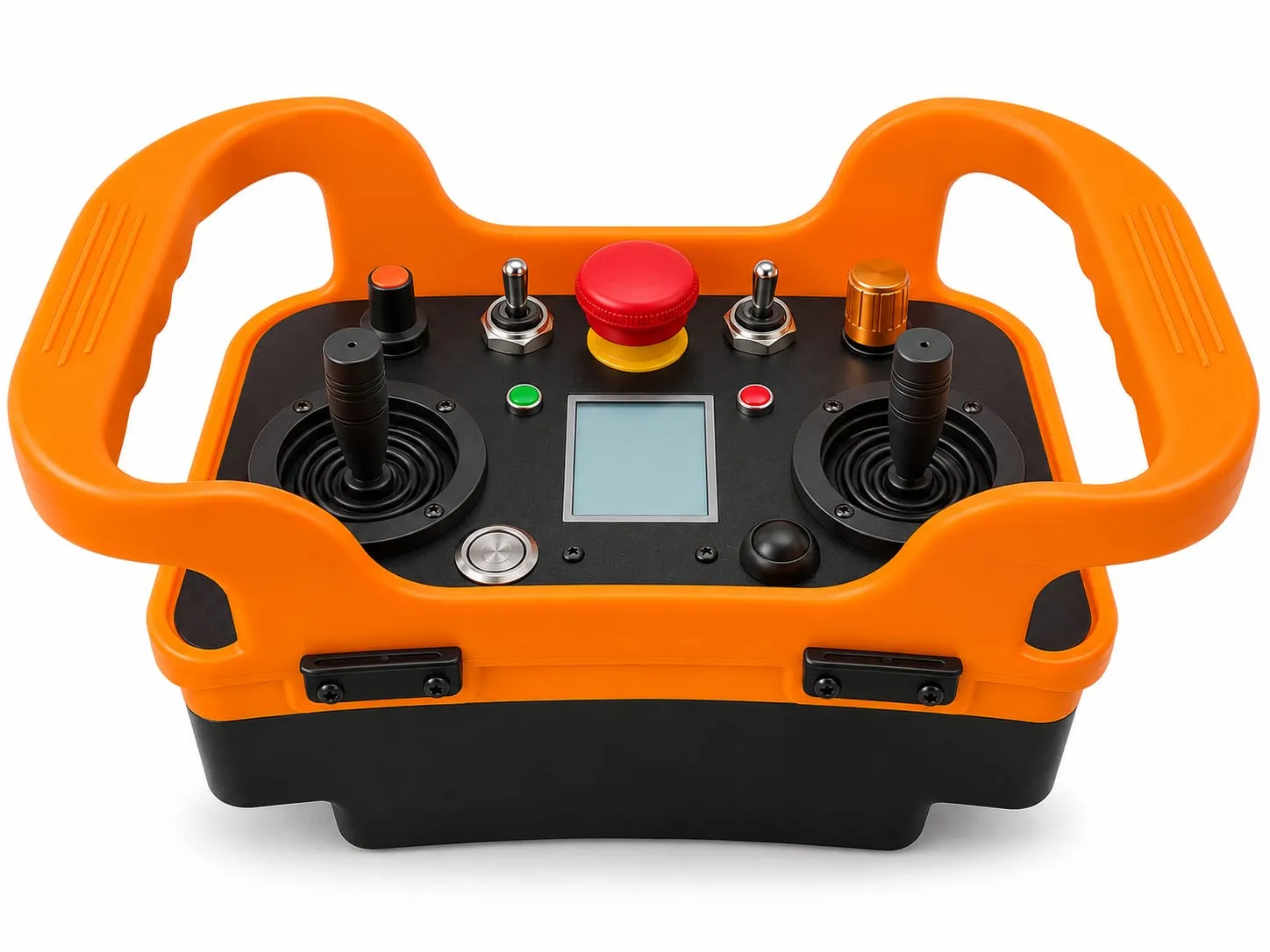
An industrial remote adds a 0–10 speed dial, emergency stop and cruise mode, and one remote can drive 2 or 4 tank movers together.
Compared with other methods
| Method | Who moves the load | Best use | Limits |
|---|---|---|---|
| Electric tank mover set | One operator, remote | Indoor moves of 10–60 t, tight aisles | Needs jacking on and off; floor and slope checks |
| Forklift | Driver | Light machines, loading trucks | Capacity and counterweight; poor view of large loads |
| Overhead or mobile crane | Crane team | Lifting, short reach | Fixed coverage; heavy cranes rarely fit indoors |
| Manual roller skids | Crew pushing or winching | Short, flat moves | Labour-heavy; harder to stop and steer |
More detail: tank movers vs forklifts, cranes and rollers.
Example: weight split for a press brake
Example (illustrative numbers, not a customer job): a press brake weighs 16 t and its centre of gravity sits 60% of the way toward the rear. Put the tank mover under the rear.
- Rear (tank mover): 16 t × 0.60 = 9.6 t. A TM-30 carries 15 t, so there is margin.
- Front (two trolleys): 16 t × 0.40 = 6.4 t, or 3.2 t per trolley. Two 4-roller trolleys at 12 t each are more than enough.
- Travel: a 120 m route at 5 m/min takes about 24 minutes of driving, well inside the TM-30’s 3–4 h run time.
A TM-20 would not fit this job: its tank mover carries 10 t, which leaves only 0.4 t of margin over the 9.6 t rear end. The full method is in how to size an electric tank mover set.
Safety on relocation days
- Keep people out of the zone between the load and walls or other machines.
- Never leave a raised machine on jacks alone; use cribbing under it while setting the movers.
- Secure tall, narrow machines against tipping before you drive.
- Stop and re-check if the load shifts on the turntable or a trolley drifts out of line.
For a step-by-step method see how to move heavy machinery with tank movers. For budgets, read the buying guide. Send us machine weights, footprints and the route, and we will propose a set: contact us.