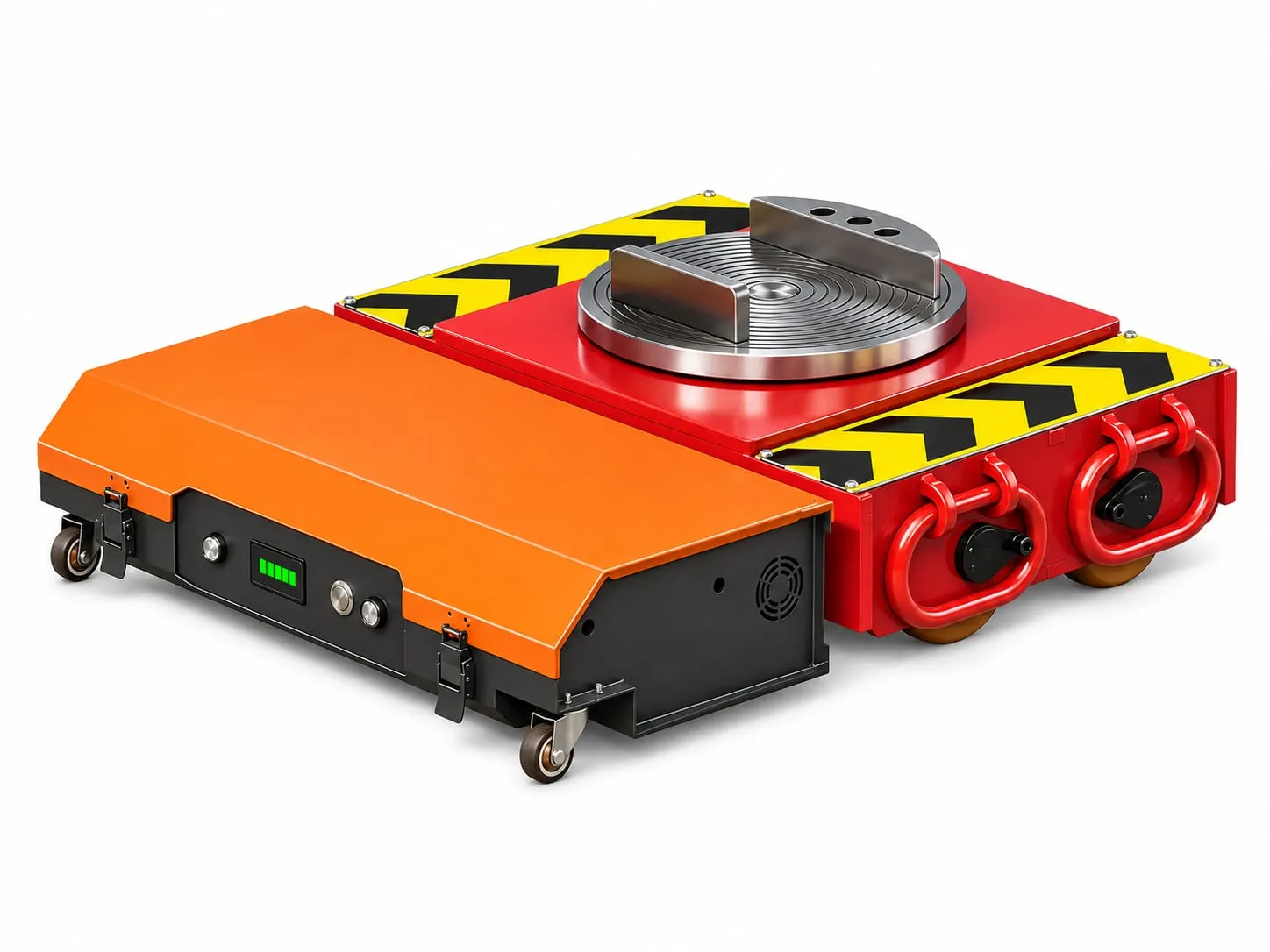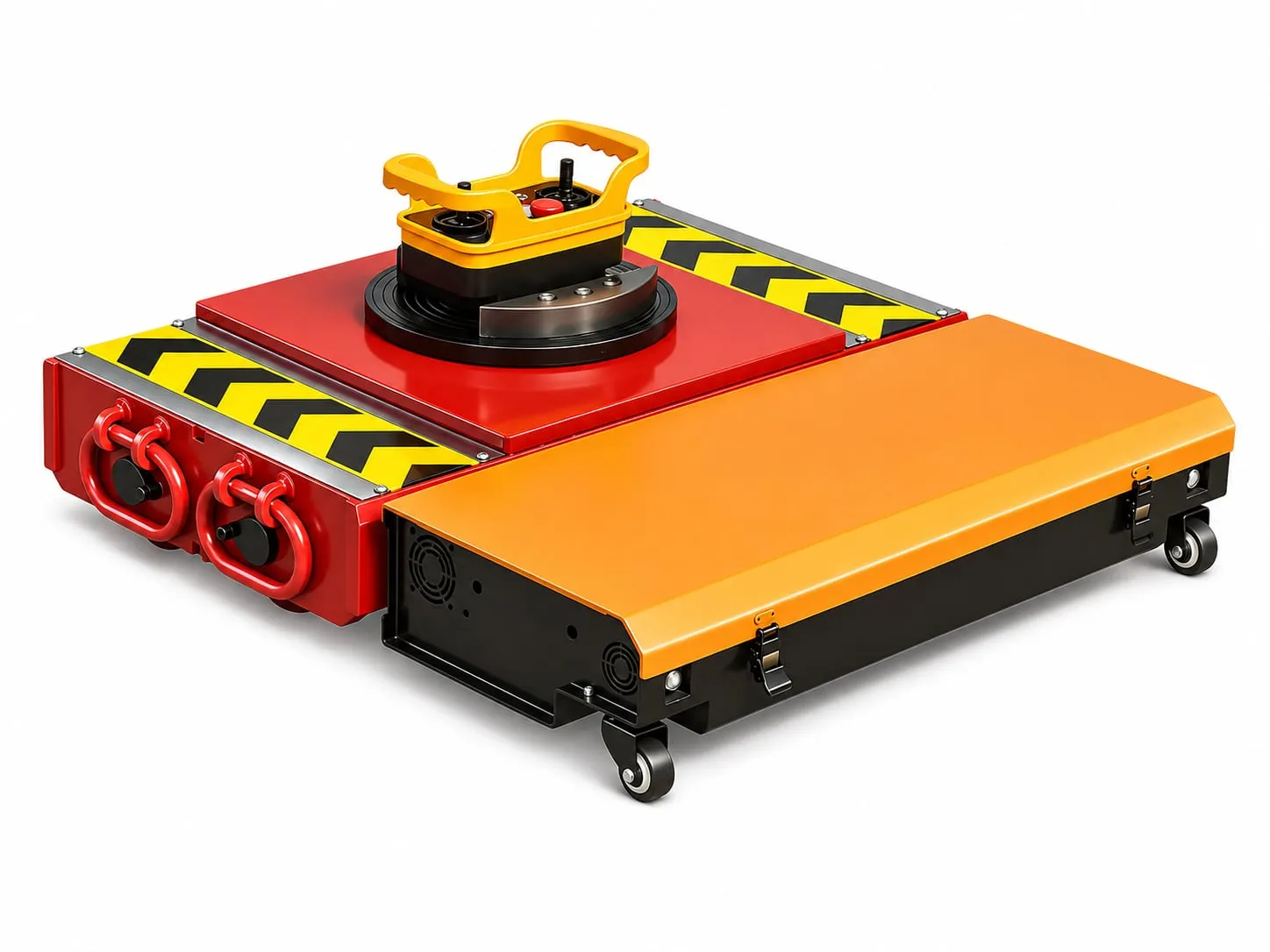
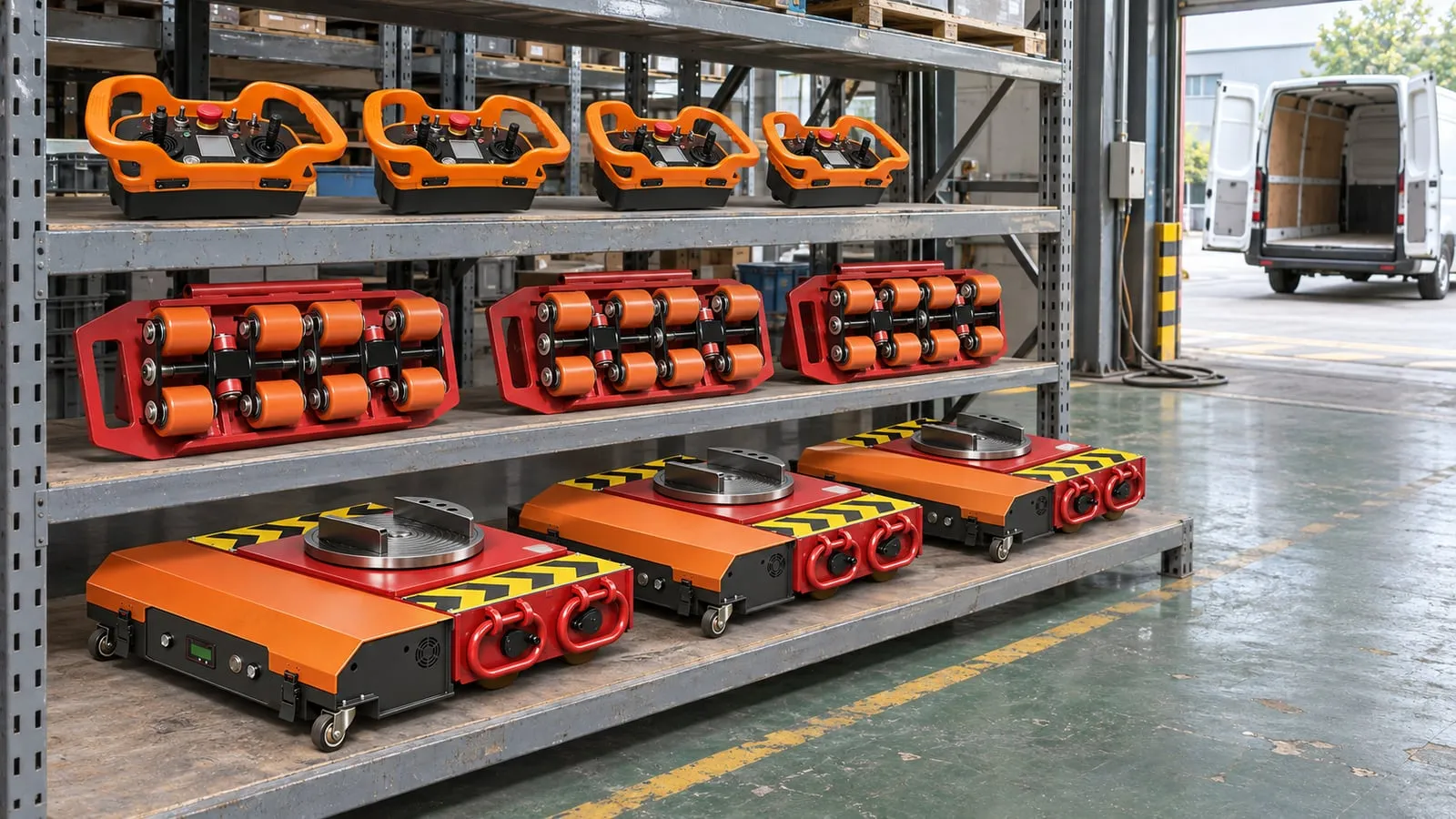
Short answer: To start a machinery moving equipment rental fleet with electric tank movers, stock two capacities that match the machines in your area, and hire them out as complete sets with auxiliary trolleys, a remote, jacks and a charged battery. Work out payback from realistic utilisation, not from the day rate alone. Back every hire with a safety briefing and a recorded inspection.
Who this is for
This guide is for rigging contractors, dealers and rental companies. SC&RA has more than 1,400 member companies in 46 nations working in machinery moving, rigging, crane work and equipment rental. In Europe, the European Rental Association represents rental companies across the continent. Tank movers suit this work: one operator, a remote, and compact units that travel in a van.
Which capacities to stock first
Look at the machines your customers move. Size each set from the load on each end, as explained in how to size an electric tank mover set. As a qualitative guide:
- Lighter end: small machine tools, compressors, generator sets, packaging lines and cabinets. A TM-20 set (20 t per set, 10 t on the mover) covers much of this work.
- Heavier end: presses, large machining centres, injection moulding machines and transformers. A TM-40 set (40 t per set, 20 t on the mover) covers a lot of it.
- Edge cases: very light jobs (TM-10) and very heavy ones (TM-60, or several movers working together). Add them once your enquiry log shows regular demand.
Two identical movers are more useful than two different ones. A single industrial remote can drive 2 or 4 movers together, so a pair of TM-20s can also carry a long load as a 2 + 2 set.
A starter kit
| Item | Qty | Why |
|---|---|---|
| TM-20 electric tank mover | 2 | Mid-size jobs; the pair works as a 2 + 2 set for long loads |
| TM-40 electric tank mover | 2 | Heavy presses and machine bases |
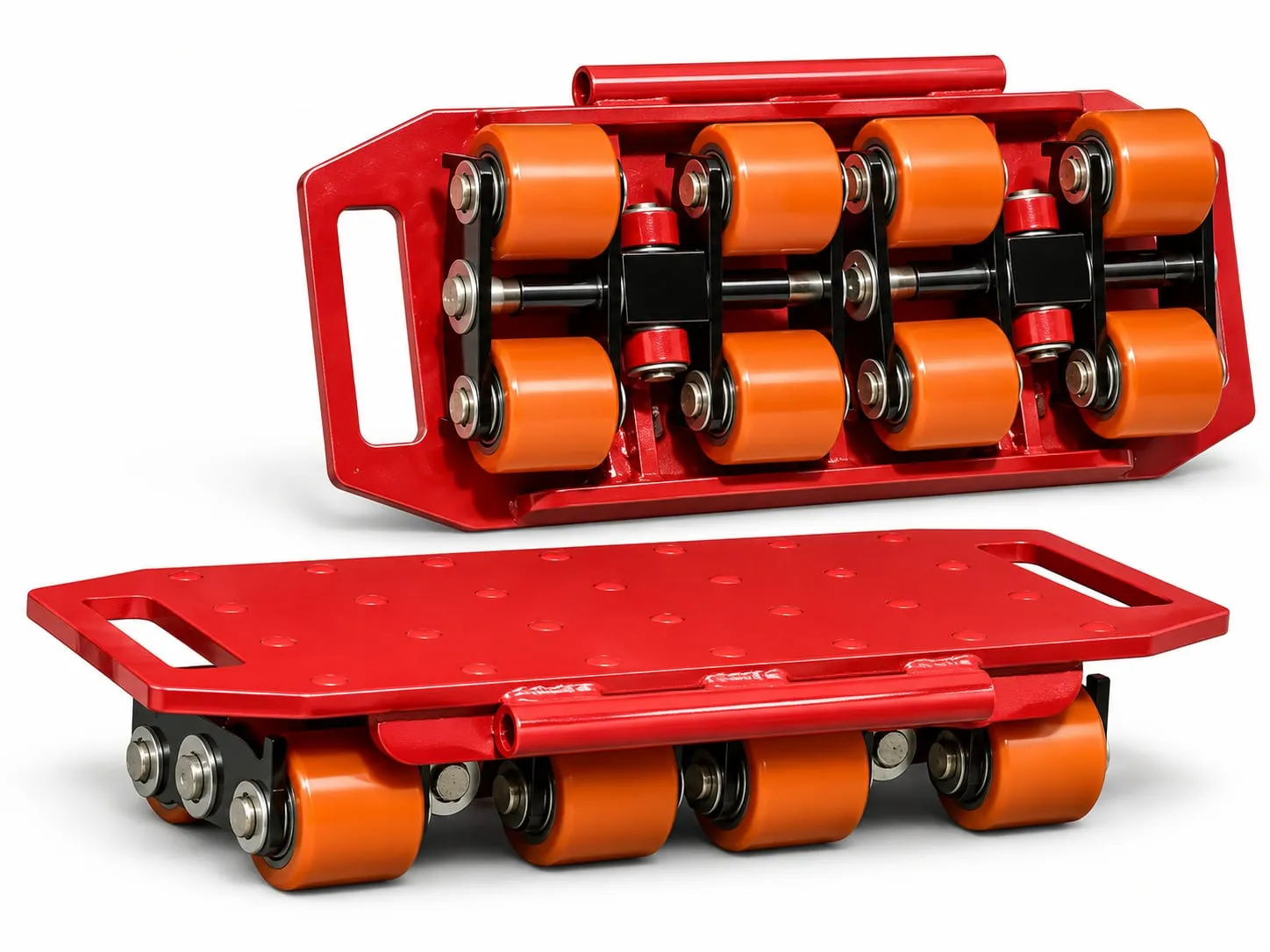
| Auxiliary cargo trolleys, 4-roller (12 t) | 2–4 | Pair with TM-20 |
| Auxiliary cargo trolleys, 8-roller (24 t) | 2 | Pair with TM-40 |
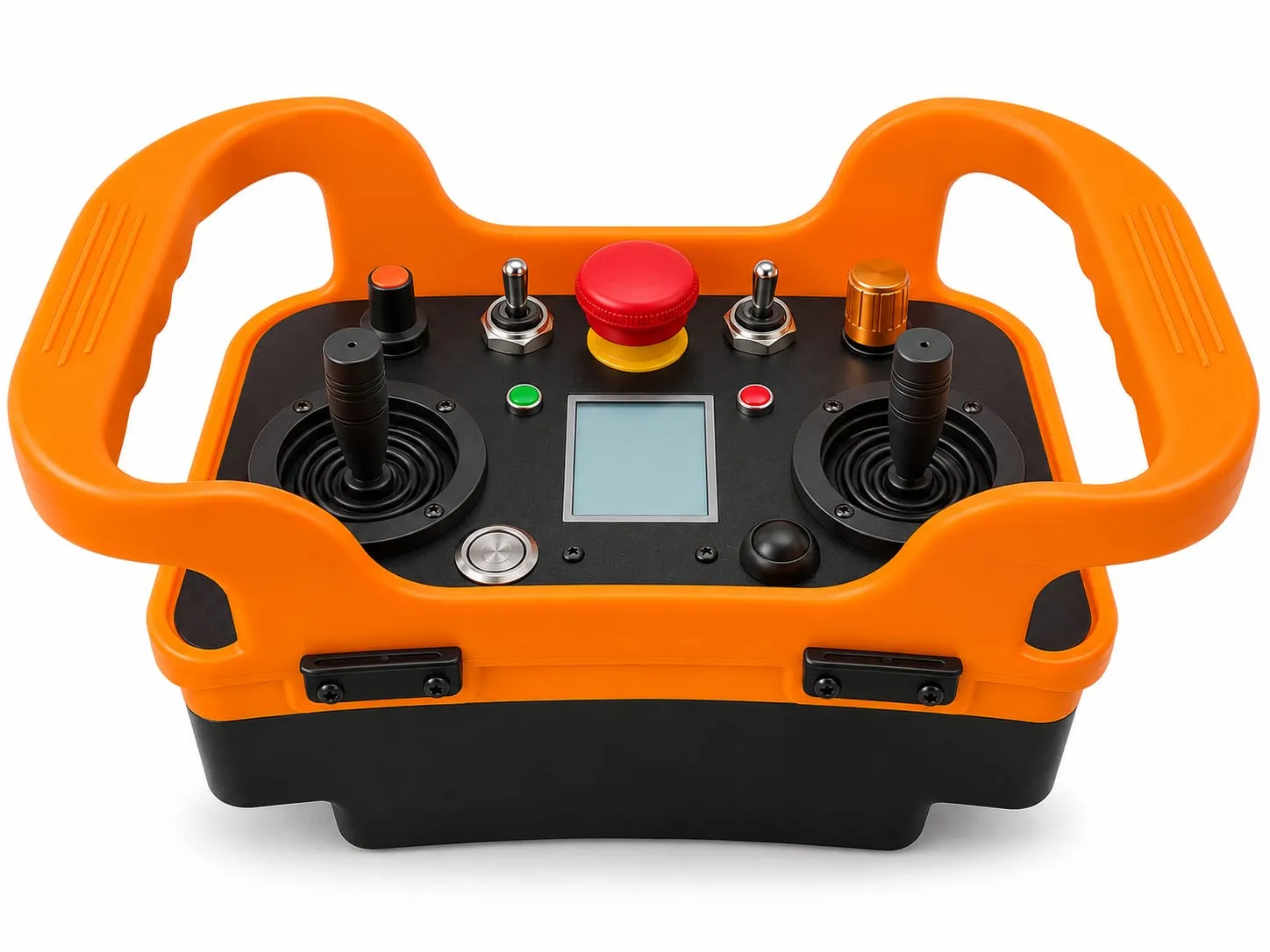
| Industrial remote | 1–2 | Speed dial, emergency stop, multi-mover control |
| Claw jacks / hydraulic jacks | 2–4 | Raise the load onto the units |
| Spare 48 V battery | 1–2 | Multi-shift jobs; no waiting for a charge |
| Steel carry boxes or the export crates | per set | Protect the units in vans and on site |
Adjust the trolley sizes after you have checked load splits on real jobs.
Payback: the formula and an example
Payback months = fleet cost ÷ (rental days per month × day rate − monthly running costs)
Rental days = set-days hired across the fleet. Running costs = inspection time, wear parts, battery replacement spread over its life, insurance, storage and unbilled transport.
Example (hypothetical numbers in generic currency units, not prices or market rates):
- Fleet cost: 30,000 units.
- Hired 12 set-days per month at 150 units per set-day = 1,800 units income.
- Running costs 300 units per month. Net = 1,500 units.
- Payback = 30,000 ÷ 1,500 = 20 months.
- At only 6 set-days per month: 30,000 ÷ (900 − 300) = 50 months.
Halving utilisation more than doubles payback. Test the formula with your own quotes, local day rates and a cautious utilisation figure.
Training and the safety briefing
The UK HSE says everyone who uses work equipment must have adequate training. It adds that self-propelled equipment should only be driven by workers trained to drive it safely. For dry hire, give each customer a short briefing and a printed sheet covering:
- Load limits: the model number is what the set moves; the mover itself carries half.
- Jacking and placing the units on solid lifting points.
- Remote control, speed setting, emergency stop and brakes.
- Route checks: floor condition, trench covers, door widths, and slopes (factory guidance is up to about 15°; check steeper ones with us).
- Charging rules and what to do if a unit misbehaves.
For methods, link customers to how to move heavy machinery with tank movers.
Inspection between hires
HSE guidance says equipment obtained from a hire company should come with physical evidence of its last inspection, such as a report or a tag. Inspection frequency should be set by risk assessment and the manufacturer’s recommendations. A practical return check:
- Polyurethane wheels and trolley rollers: cuts, flat spots, embedded swarf.
- Brakes hold on a test run; both motors drive evenly.
- Turntable rotates freely; deck plate and frame show no cracks or bending.
- Remote: buttons, emergency stop, battery; cables and charger undamaged.
- Battery charged for the next hire; see the battery guide for storage and charging.
- Tag the set with date, inspector and next due date, and keep the record.
Insurance questions to ask
Rules differ by country, so ask a broker: is your equipment covered while it is on hire and in transit? Who is liable if the customer’s machine or floor is damaged? Does cover change between dry hire and wet hire? What do your hire terms require from the customer?
Dealer and private-label support
TankMover Technology has 20+ years of industry experience and exports to 85 countries. We supply dealers and rental firms under their own brand through our OEM / ODM programme, with sizing help for your customers’ jobs. Compare methods in tank movers vs forklifts, cranes and rollers, then contact us with your target market and first-fleet list.